 Made AI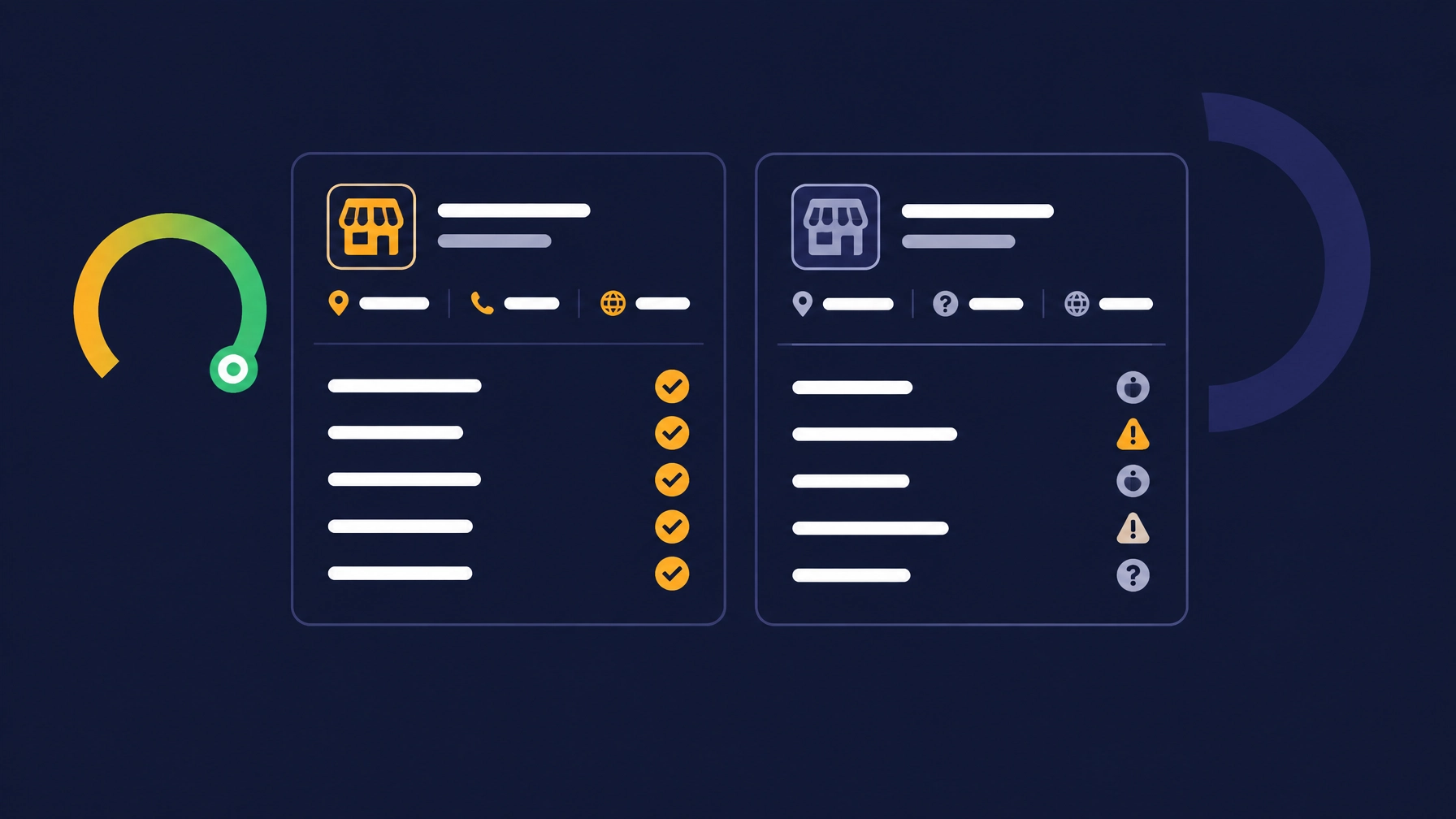
You ask ChatGPT for a reliable plumber, beauty salon or accountant in your area.
Your competitor appears.
You don’t.
The obvious assumption is that your competitor must have a better website, more reviews or stronger traditional search rankings. That may be true. But it may also be a simpler problem:
AI systems may have a clearer, more consistent picture of your competitor than they have of your business.
That distinction matters. AI assistants and voice services do not simply produce a list of businesses in order of Google ranking. They gather information from websites, business profiles, review platforms, directories and other sources. Then they try to work out which businesses match the question.
If the information about your business is incomplete, inconsistent or difficult to interpret, another business may appear to be the safer answer.
This is the practical side of AI visibility for small business. It’s not about guaranteeing that an assistant will name you. No business can control which companies a third-party service ultimately surfaces. It’s about improving your chances of being discovered when a potential customer asks a relevant question.
First, check whether you’re testing the right thing
Many business owners search for their business name in ChatGPT and assume the result tells them whether they are visible.
It doesn’t.
That only tests whether the system recognises your business. A customer who has never heard of you won’t search for your name. They’ll ask:
- “Who can repair a boiler near me?”
- “What’s the best hair salon in Bristol?”
- “Find a local cleaner for a one-off deep clean.”
- “Which estate agents cover homes in this area?”
- “Where can I get my car serviced nearby?”
The useful test is whether your business appears when the question describes the service, location and customer need.
Try asking the same type of question in ChatGPT, Google’s AI features, Perplexity or another assistant. Use several variations.
Record:
- Which businesses are mentioned.
- Which sources are cited.
- Whether the answer gets any details about your business wrong.
- Whether your business is missing completely.
- What the named competitors appear to have in common.
This is the starting point for understanding your local business AI discovery position.
For more detail on testing the right prompts, read our guide to checking whether your business is visible to ChatGPT.
Why might your competitor appear first?
AI search is selective. An assistant may only mention a few businesses, even when many legitimate providers serve the area.
It also has to make a judgement using information from multiple places. That creates several common failure points.
1. Your business details do not match everywhere
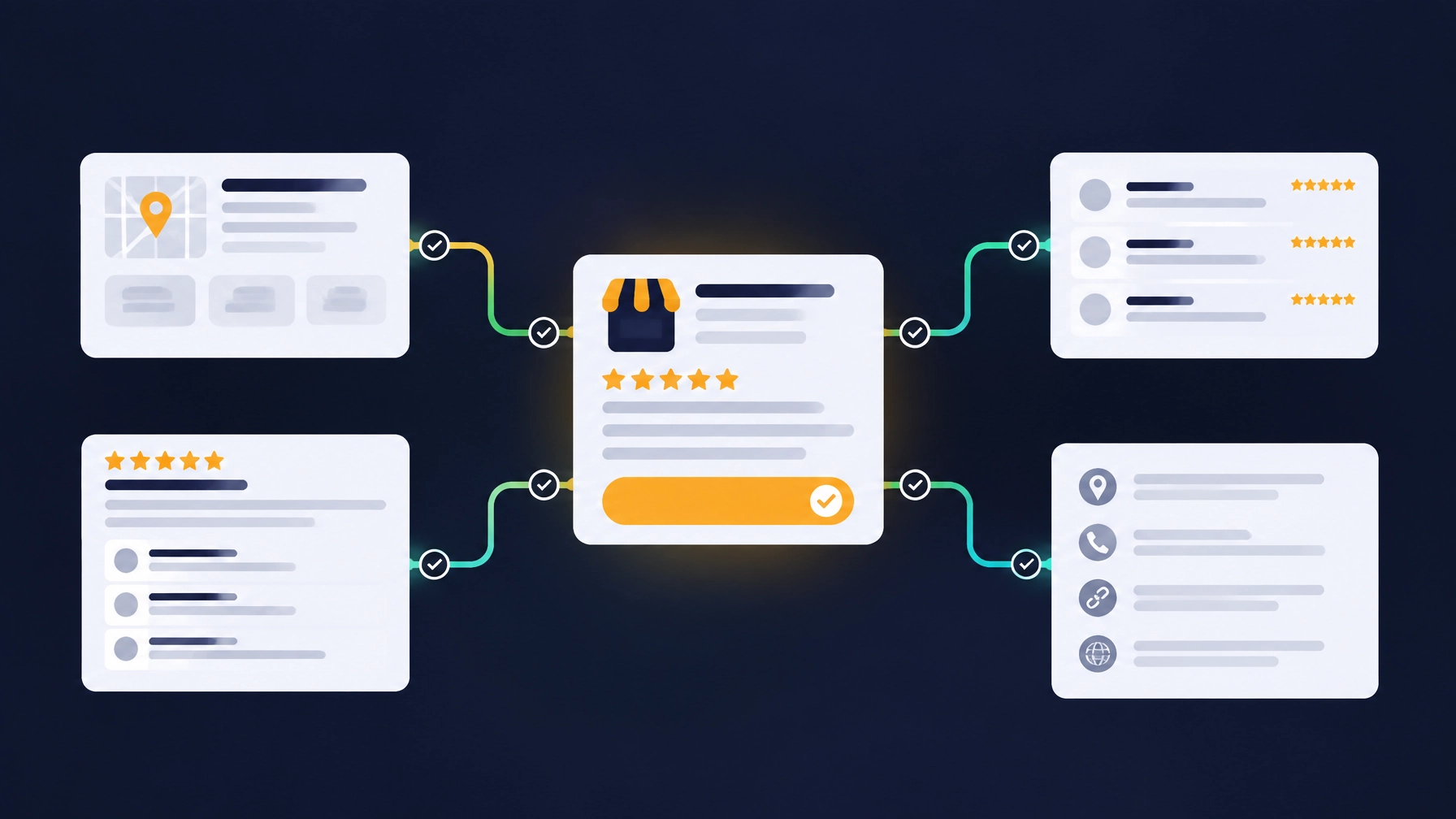
Check your business name, address, phone number, opening hours and service area.
These details should agree across:
- Your website.
- Google Business Profile.
- Major business directories.
- Review platforms.
- Social profiles.
- Local industry listings.
A previous phone number on one directory may seem harmless. An old address may look like a minor administrative issue. But when different sources provide different facts, an AI system has to decide which one to trust.
In practice, the business with the clearer and more consistent information may be easier to identify.
This is one of the first things to fix because it affects both customers and automated systems. A customer who finds three different opening times is likely to hesitate. An AI system may also avoid relying on information it cannot verify.
2. Your website does not state clearly what you do
A homepage that says you provide “quality solutions” is not very useful to a customer or an AI assistant.
What do you actually provide?
Do you install boilers, repair them, service them or all three? Do you offer emergency callouts? Which postcodes do you cover? Do you work with domestic customers, landlords or commercial premises?
Your website should answer these questions directly.
Create clear pages or sections for your main services. Include:
- The exact service name.
- The locations you cover.
- Who the service is for.
- What the work includes.
- Any important limitations.
- How customers can contact you.
- Frequently asked questions.
The aim is not to fill your website with repeated phrases. It is to make the facts easy to find, understand and verify.
For example:
We provide emergency boiler repairs in Leeds and surrounding areas for homeowners and landlords. We cover no-heat faults, pressure problems and common boiler breakdowns. Same-day availability depends on engineer capacity.
That is more useful than:
We deliver reliable heating solutions tailored to your needs.
The second sentence sounds polished. The first explains the business.
3. Your reviews are numerous but not very informative
Reviews help show that your business is active and has served real customers.
However, a collection of reviews saying “great service” gives limited information about what you do. More detailed reviews can provide useful context about your services, locations, response times and customer outcomes.
You should never script or manipulate customer reviews. Instead, make it easy for customers to describe their genuine experience.
A straightforward request could be:
Thanks for using our service. If you have a moment, please tell us what work we completed and how you found the experience.
That may produce a more useful response than simply asking for “a five-star review”.
Also respond to your reviews, including negative ones. Keep replies calm, factual and helpful. A response can clarify what happened and show future customers that you take concerns seriously.
Recent activity matters too. A large number of reviews from several years ago does not necessarily communicate that the business is active today.
Check:
- How many reviews you received in the last three to six months.
- Whether recent reviews mention your actual services.
- Whether you reply consistently.
- Whether your business profile shows current information.
- Whether customers are being directed to the correct profile.
Reviews are only one signal. They cannot force an AI service to mention your business. But they can help create the independent evidence that supports what your website says.
4. AI crawlers may not be able to read your website
Your website may look perfectly normal in a browser but still have technical settings that limit access for automated systems.
For example, an old robots.txt file may block certain AI crawlers. Pages may also be hidden behind scripts, poorly linked or missing basic structured information.
You don’t need to become a technical specialist. Ask your web developer to check:
- Whether important pages can be crawled.
- Whether your services are linked from the main navigation.
- Whether your contact details are visible in plain text.
- Whether your website uses suitable local business and service structured data.
- Whether important information is hidden only inside images or interactive elements.
- Whether old pages contain incorrect details.
Structured data is information added to a page to help machines interpret key facts such as your business type, address, opening hours and services. It does not guarantee visibility, but it can make important information easier to process.
Our explanation of how AI search decides which businesses to surface covers crawler access, third-party evidence, structured content and freshness in more detail.
What should you fix first?
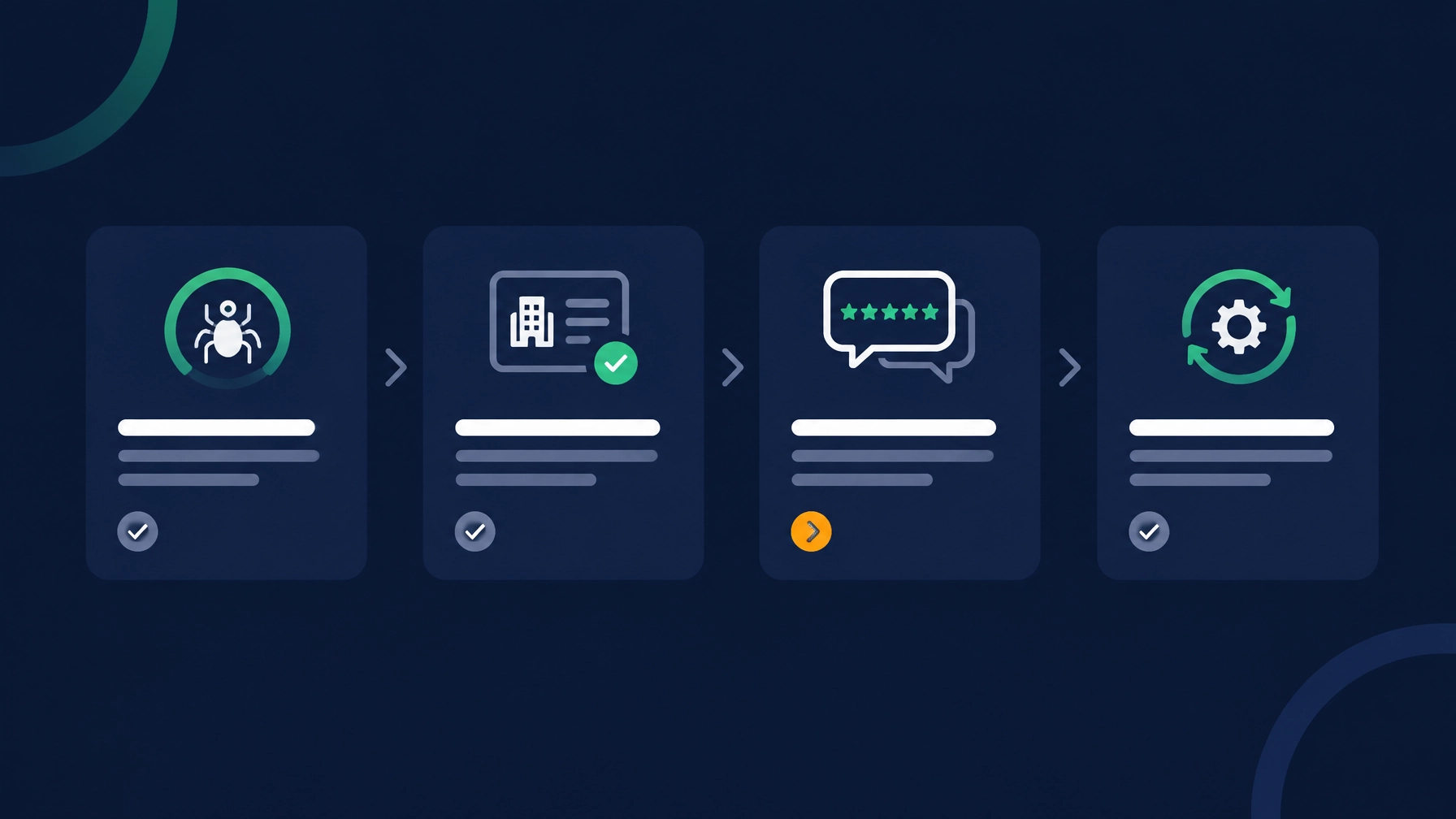
Don’t try to change everything at once. Use this order.
1. Correct the facts
Fix wrong phone numbers, addresses, opening hours, categories and service areas. Start with your website and Google Business Profile, then check the most important directories and review platforms.
2. Clarify your services
Make sure a customer can understand exactly what you offer and where you operate within 10 seconds of opening your website.
3. Test your real customer questions
Use questions based on your services, locations and common problems. Don’t only search for your business name.
4. Strengthen genuine customer evidence
Maintain a steady, ethical process for asking satisfied customers for honest feedback. Respond to reviews and address recurring complaints in the underlying business.
5. Check the technical access
Confirm that automated systems can reach and interpret your important pages. This is particularly relevant if your site has recently been redesigned.
This work overlaps with topics such as answer-engine optimisation, generative-engine optimisation and voice search for local businesses. The terms matter less than the underlying task: make your business information clear, consistent, credible and easy to find.
What about the “93%” claim?
You may have seen claims that 93% of businesses have at least one factual error in AI answers about them.
Treat precise figures like this carefully. Research in this area is developing quickly, and different studies test different platforms, prompts and types of businesses. There is no single universal error rate that applies to every local business.
The broader issue is well established: AI-generated answers can contain outdated or incorrect information because they combine data from multiple sources.
That is why you should test what an assistant says about your business, rather than assume it is accurate. Check the answer against your current details. If it is wrong, look for the source of the conflicting information and correct it where possible.
The next practical step
You do not need to rebuild your entire website to start improving your business digital discoverability.
Begin with the facts. Then check your services, reviews, website structure and technical access. Work through the highest-impact problems first.
Made AI Ready’s free business visibility scan checks key parts of your digital presence and explains:
- What’s working.
- What’s missing.
- Why it matters.
- What to do next.
It cannot guarantee that ChatGPT, Google or any other AI service will name your business. No service can control that decision.
It can help you identify information gaps and improve the signals these systems may use to discover and understand your business.
That is the real objective: not a promise of recommendation, but a clearer and more trustworthy digital presence that improves your chances of being found.