 Made AI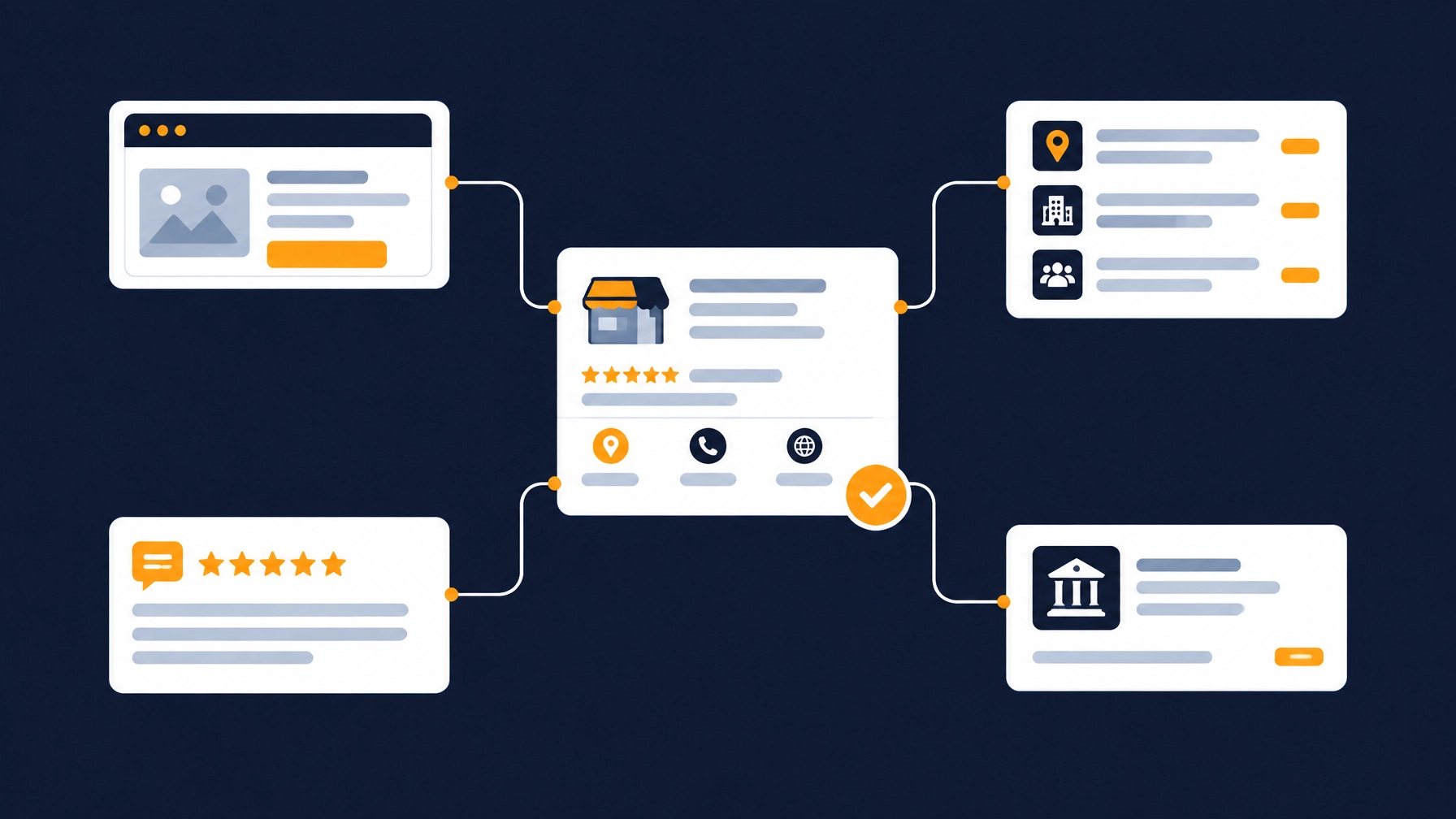
Has your Google Business Profile been claimed, verified and filled in?
If the answer is yes, you may assume the local visibility job is largely done.
That advice used to be close to the truth. It still matters to claim and maintain your profile. But it is no longer sufficient on its own.
Google Business Profiles are not dead in 2026. The more important change is what they do.
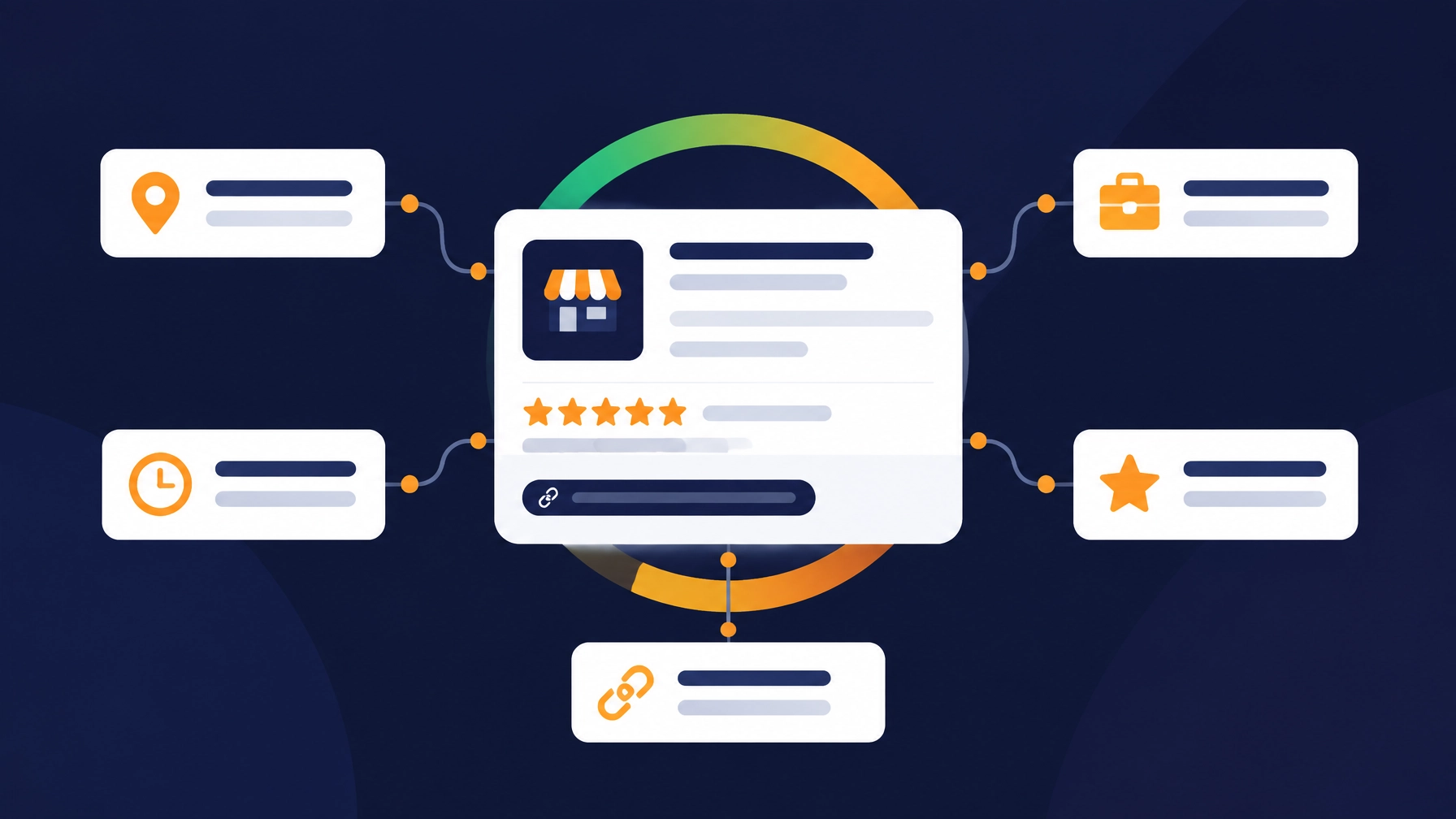
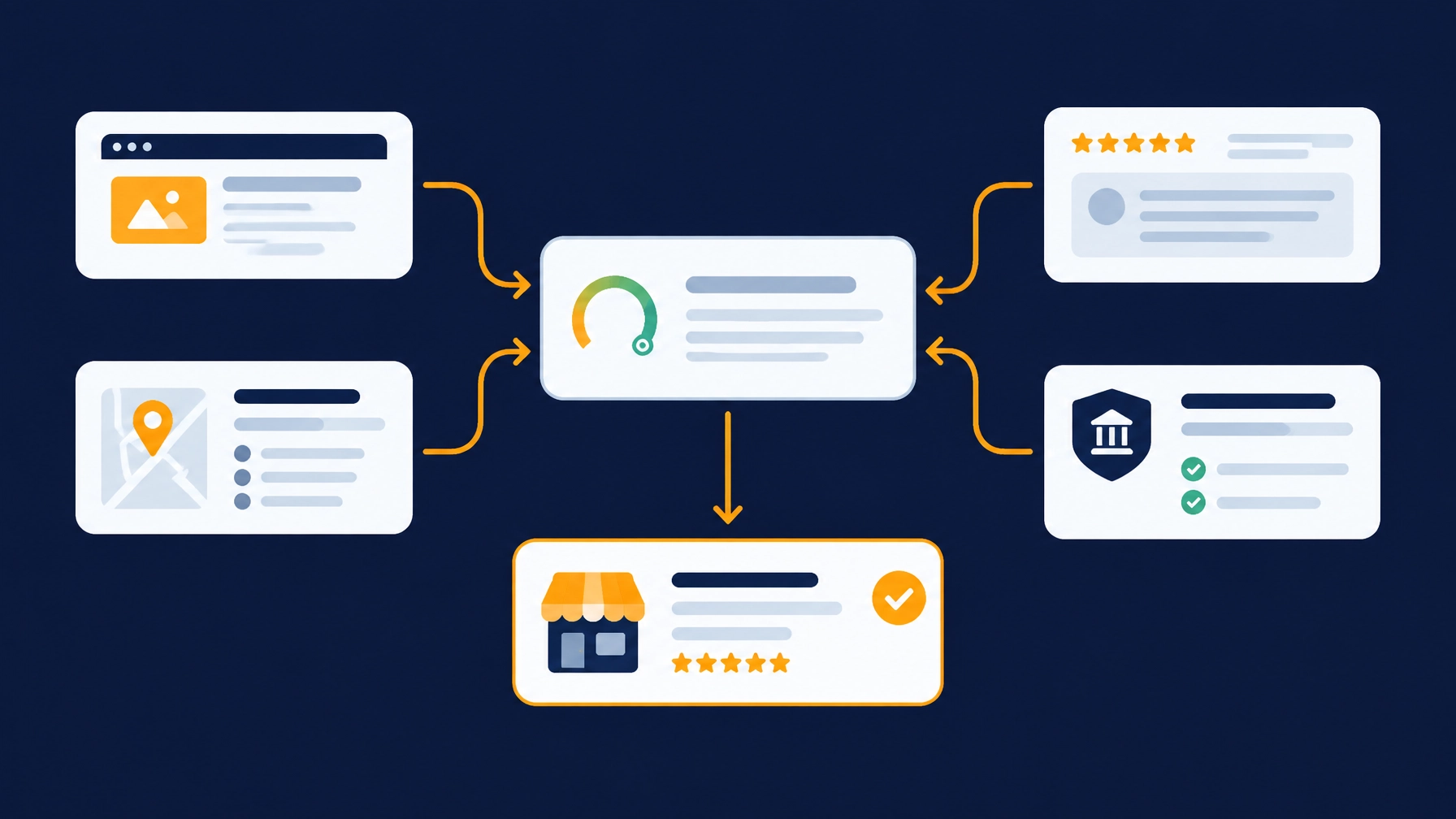
A customer scrolling through your profile sees a useful snapshot of your business. An AI assistant may treat that same profile as one set of claims among several. It may compare those claims with your website, directories, review platforms, trade bodies and other public sources.
Where the information agrees, your business is easier to understand.
Where it conflicts, the assistant has to decide which version to trust. It may give less weight to the business, describe it inaccurately or leave it out of the answer altogether.
That is the central issue in local business AI discovery.
Are Google Business Profiles still important?
Yes. They remain an important source of business information for Google Search and Maps, and they continue to influence how customers find, assess and contact local businesses.
Google itself describes Business Profiles as a way for customers to find businesses on Search and Maps. The profile can show your category, location, opening hours, services, reviews, photos and contact details.
For many local searches, it remains an anchor.
The assumption that needs challenging is different:
A complete-looking profile is not necessarily a complete and trusted picture of your business.
Your profile may be accurate as far as it goes. But an AI system is not always looking at it in isolation. It may be trying to build a broader understanding of what your business is, where it operates, what it offers and whether those details are supported elsewhere.
That is why a claimed profile can still sit inside a weak wider presence.
What does an AI assistant do with your profile?
No one outside the platforms can see exactly how every AI-generated answer is assembled. Behaviour varies by assistant, query, location and time.
A local question asked through Google, ChatGPT, Gemini, Perplexity or a voice assistant may involve different sources and different retrieval systems. Some platforms may use live web information. Others may rely on previously collected data, licensed sources, maps information or a combination of signals.
So it would be inaccurate to describe one universal process.
The broader pattern is clearer, though.
An AI assistant needs to form an answer from available information. It is less interested in displaying one business listing than in resolving a customer's question. That means it may need to establish:
- What type of business is this?
- Which services does it actually provide?
- Where does it operate?
- Is it open or available when needed?
- Does the business appear established and credible?
- Do independent sources support what the business says about itself?
Your Google Business Profile can help answer those questions. But it is not automatically treated as unquestionable fact.
In plain English, the profile is not just a listing. It is evidence.
Your profile fields are claims, not isolated facts
A profile contains structured information. That means important details are placed into defined fields rather than appearing only in general website copy.
This makes the information easier for systems to interpret. It also makes the claims easier to compare.
Your business name, category, opening hours, services, address and service area each tell an automated system something specific. But those details may be checked against other public information.
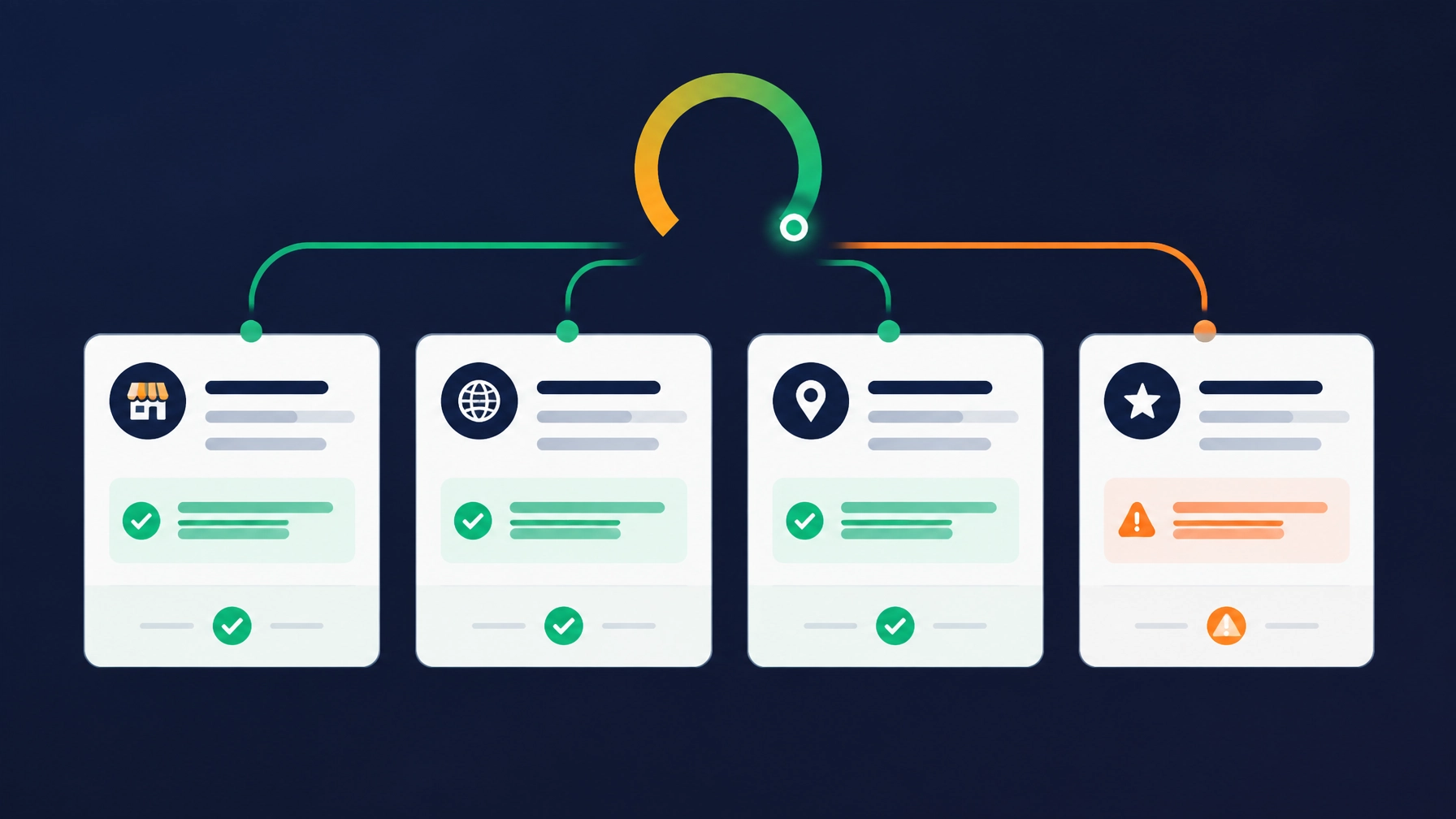
Suppose your profile describes you as a boiler installation specialist. Your website describes general plumbing but does not mention boiler work. A directory lists you as a heating engineer. A trade association page uses an older business name. Your opening hours vary across platforms.
None of those details automatically proves that your business is unsuitable. But together, they create uncertainty.
An assistant may not know which description is current. It may not know whether the different names refer to the same business. It may not be confident that a service is available in the area mentioned by the customer.
The issue is not necessarily that one field is wrong.
The issue is that the public record does not form one clear explanation.
Why independent sources matter
Your own website and Google Business Profile are important. But both are controlled or supplied by your business.
That is why independent sources can add a different kind of evidence.
Reviews, directories, local publications, trade bodies and industry platforms may confirm that the business exists, serves a particular area and provides particular services. They may also introduce different information: sometimes helpful, sometimes outdated or contradictory.
This is not about collecting mentions for the sake of appearances. It is about whether separate sources describe the same business in broadly compatible terms.
The principle is similar to how a person assesses a business.
If your website says you have operated in a town for 15 years, a trade directory lists you there, customers discuss that service locally and your business profile shows the same location, the overall picture becomes easier to accept.
If only your own website makes the claim, there is less independent support.
This is also why reviews can matter beyond their star rating. As discussed in our article on whether Google Reviews affect ChatGPT recommendations, review content, recency and presence across relevant platforms can contribute to how a business is understood.
No single review guarantees visibility. No platform guarantees that a business will be surfaced. Independent evidence is one part of a wider picture.
What happens when sources disagree?
Conflicting information creates a practical problem for local business AI discovery.
An assistant may encounter differences such as:
- A service area on the profile that does not match the website.
- Opening hours that differ between Google and an industry directory.
- A business name that changes across listings.
- A category that does not reflect the services described elsewhere.
- A location that appears to be current on one platform but old on another.
- Reviews that refer to services the business no longer provides.
- A website that makes broad claims without supporting detail elsewhere.
Some differences are minor. Businesses move premises, change their hours and expand their services.
The risk comes from unresolved or repeated inconsistency. A single old listing may not decide anything. But several conflicting signals can make the business harder to classify with confidence.
That matters because an AI assistant is trying to answer a specific customer question, not conduct a full investigation.
If it cannot establish whether you provide the requested service in the requested area, it may choose a business with a clearer public record. That does not mean the other business is better. It means the answer is easier to construct.
The real difference is not necessarily quality.
It is clarity.
A complete profile can still be weak outside Google
Many business owners have done exactly what they were told. They claimed their profile, added photographs, selected a category, listed services and kept their hours reasonably current.
That work remains worthwhile.
But it only describes one part of your digital presence.
Your business digital discoverability also depends on what exists beyond the profile. AI systems may draw on websites, directories, review platforms, local news, professional memberships and other publicly accessible sources.
This is why a business can look polished in Google Maps but remain difficult to interpret elsewhere.
The profile may say one thing. The website may say something broader. Directory pages may be incomplete. Review platforms may describe the business using old terminology. A trade body may list a previous address.
To a human who already knows the business, these differences may be obvious and easily dismissed.
To an automated system working from public data, they may be meaningful.
Does this affect voice search for local businesses?
It can.
Voice searches are often short and immediate. A customer may ask for a local service, a nearby business or help with a specific problem. They may not want a page of results. They may want a small number of options, or a direct answer.
The assistant therefore has to interpret the request and match it with businesses it can understand.
That does not mean voice assistants use a single special ranking system. It does mean that unclear business information can become more important when the customer is relying on a spoken response rather than browsing several listings.
If your public information does not clearly establish your service, location or availability, the assistant may have less confidence in including you.
This is one reason AI readiness for small business is not only a technical website issue. It is also an information issue.
So, are Google Business Profiles dead?
No.
They still matter. In many local searches, they remain one of the most visible and useful sources of business information.
The shift is in how the profile should be understood.
It is not the whole local presence. It is one component of a wider information system.
A profile can help an assistant discover your business. The rest of the public record can help it understand and verify what that profile claims. Where those sources support one another, your business becomes easier to describe accurately.
Where they do not, your chances of being discovered may weaken.
This is also why a profile with every field completed is not necessarily stronger than one with a smaller amount of clear, consistent information. More information is not always better if it creates new contradictions.
The goal is not to add claims everywhere.
The goal is to make the business understandable across the places where customers and automated systems may encounter it.
What should you take from this?
If you have already claimed your Google Business Profile, you have completed an important baseline task.
You have not necessarily completed the wider job of making your business easy to understand.
The useful questions are conceptual:
- Does your public information describe one clear business?
- Do independent sources support the main claims in your profile?
- Are important details current rather than merely present?
- Could an assistant identify your services and location without resolving several contradictions?
- Is your profile supported by a wider digital presence, or is it carrying all the weight alone?
You do not need to become an AI specialist to understand the answers. You need a clear view of what your business says about itself and what other sources say about it.
Our wider guide, How AI Search Engines Decide Which Businesses to Recommend, explains the broader signals involved. You can also read about the most common reasons businesses are invisible to AI search and what AEO means for small businesses.
For a business-specific view, the Made AI Ready visibility scan checks how clearly your business is represented across key parts of its digital presence.
The scan is designed to show what appears to be working, what may be unclear and where further attention may be justified. If you need prioritised, ready-to-apply detail, that sits in the paid report.
No honest provider can promise that an AI assistant or voice service will surface or recommend your business. Third-party platforms control those decisions, and their systems change over time.
What you can do is improve the clarity, consistency and credibility of the information those systems may use.
Your Google Business Profile still matters.
It simply works best when the rest of your public record agrees with it.