 Made AI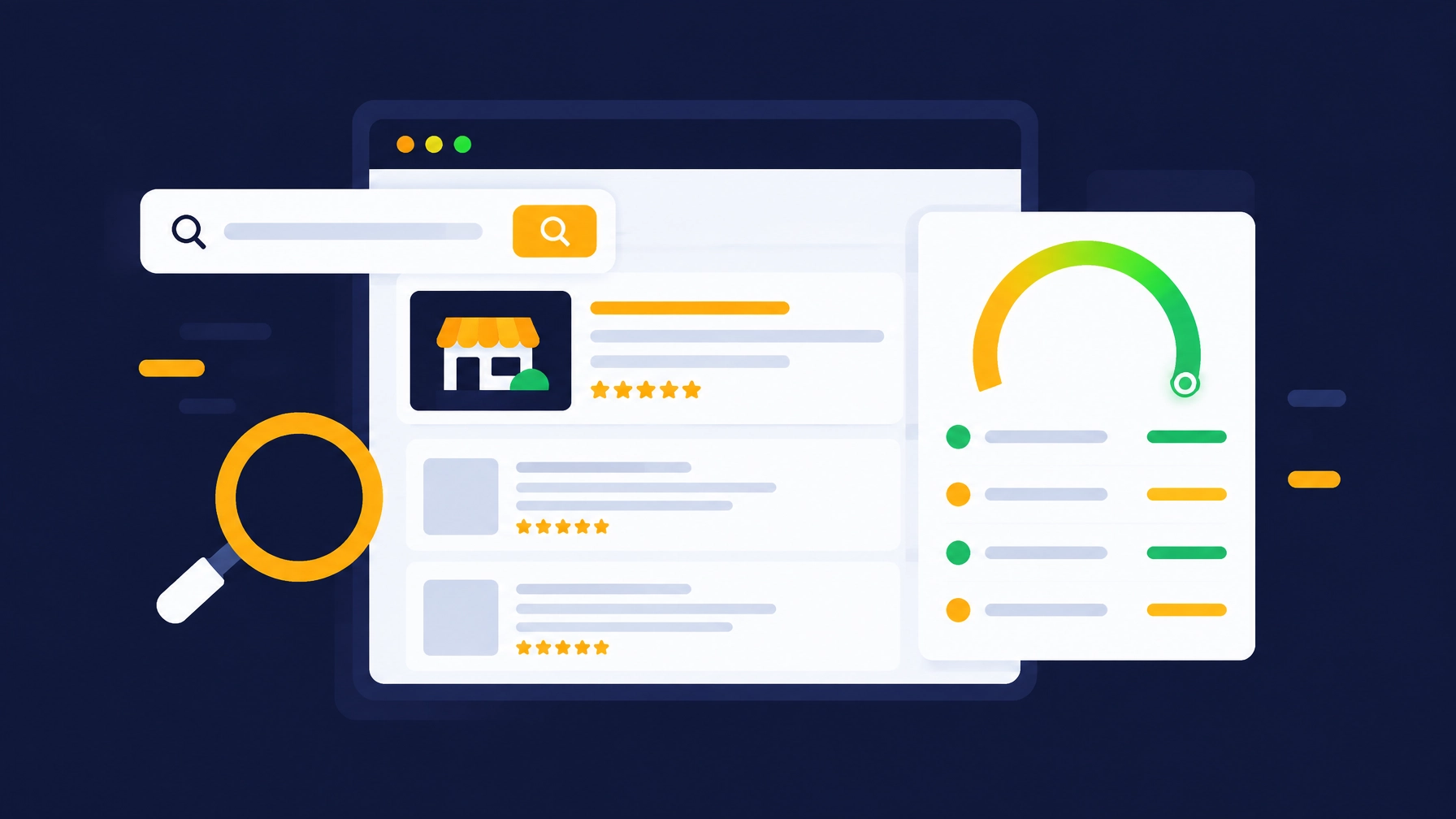
You may assume that appearing near the top of Google means AI assistants can find your business too.
That assumption is no longer reliable.
Traditional search is built around a ranked list of blue links. AI search is different. An assistant may need to identify what your business does, where you operate, whether your information is current and whether independent sources support what you claim.
The goal is not to force an AI assistant to mention your business. No business can control which companies a third-party AI service surfaces or recommends.
The practical goal is to improve your chances of being discovered by making your business information clear, consistent and trustworthy.
Here's what actually influences whether AI and voice systems can identify and understand your business.
1. Clear and consistent business information
AI and voice systems need to establish basic facts before they can describe a business with any confidence.
That sounds obvious. In practice, it is often where visibility starts to break down.
A business may have one version of its name on its website, another on Google, an old phone number on a directory and incomplete opening hours somewhere else. To a person, that may look like normal online clutter. To an automated system, it can create uncertainty about what is current and which source is most reliable.
This is one of the main differences between being searchable and being understandable.
The broad issue is consistency across the places your business appears online — not just your website, but also your main profiles, listings and other public sources that may help confirm who you are and what you do.
For a fuller explanation of how this appears in AI tools, read Is My Business Visible to ChatGPT?
Don't treat any single AI response as a final verdict. Results can vary by platform, wording, location and date.
2. Clear service and location detail
A second issue is whether an assistant can work out what you actually offer and where you offer it.
Many business websites still speak in broad, generic terms. They sound polished, but they don't answer the basic questions that matter to discovery:
- What does this business do?
- Which services matter most?
- Who is it for?
- Which locations are genuinely covered?
If that information is vague, scattered or missing, an AI system may struggle to connect your business to the kind of question a customer actually asks.
This is why broad relevance matters more than clever wording. A business may have a modern website and still be hard for an assistant to interpret if the service detail is thin, the location coverage is unclear or the pages do not line up with the way customers describe the job they need done.
In plain English, the system needs enough context to match your business to a real-world request. If that context is weak, your chances of being discovered may be weaker too.
3. Credible independent evidence
Your own website is only one part of the picture.
AI systems may compare what you say about your business with what other public sources suggest. That does not mean there is a single score being passed from one platform to another. It means consistency and credibility often come from the wider pattern.
This is where independent evidence matters.
Examples include:
- customer reviews
- recognised directories
- trade or professional bodies
- local coverage
- relevant third-party listings
What actually matters is not volume for its own sake, but whether there are believable signals that support your core claims about service, location and reputation.
If a business says it covers a particular area, handles a certain type of work or has a strong local reputation, independent sources may help reinforce that. If those sources are sparse, outdated or contradictory, an assistant may have less to work with.
If you want the longer explanation, Do Google Reviews Affect ChatGPT Recommendations? covers the relationship in more detail.
4. Technical accessibility
Even accurate information can be missed if systems cannot access it properly.
This is the part many business owners never see, because the website may look fine in a browser while still being harder than necessary for automated systems to read.
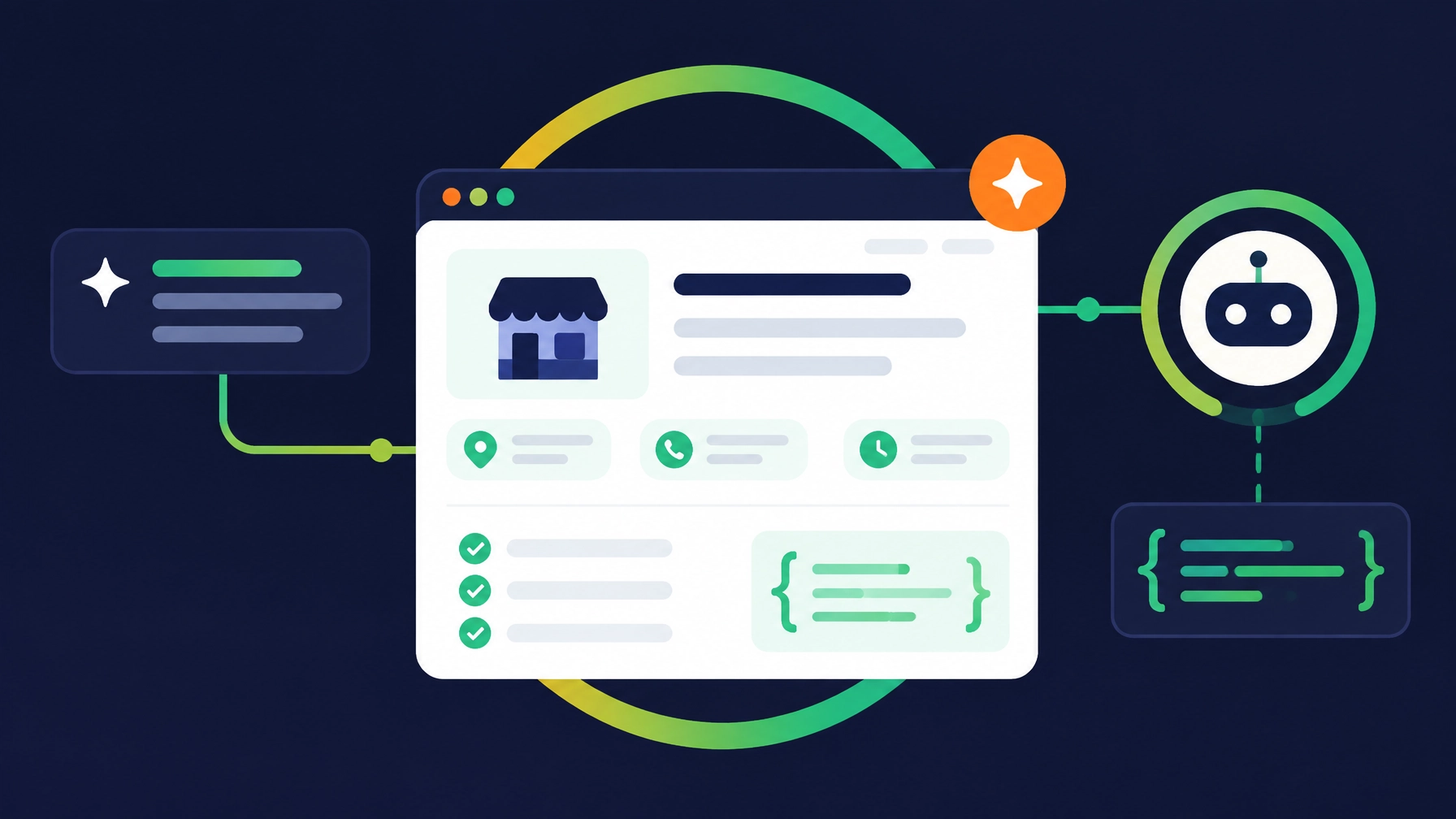
In plain English, technical accessibility means your important pages can be found, read and interpreted without unnecessary obstacles. That can include how content is structured, whether key pages are indexable, whether important details are visible in the page itself and whether the site is set up in a way that supports straightforward crawling.
You may hear terms such as structured data, crawler, robots.txt or llms.txt.
These are not magic fixes. They are supporting mechanisms.
- Structured data is extra code that labels facts such as your business type, services or opening hours.
- A crawler is software that visits and reads web pages.
- robots.txt is a file that tells some crawlers which areas they may access.
- llms.txt is a proposed summary file for AI tools, but it is not the main factor most small businesses should focus on first.
The real difference is this: technical setup can help systems interpret clear information, but it cannot compensate for vague, inconsistent or unsupported business details.
For extra context, you can read What Is llms.txt?, but don't treat it as a shortcut.
5. Current and maintained information
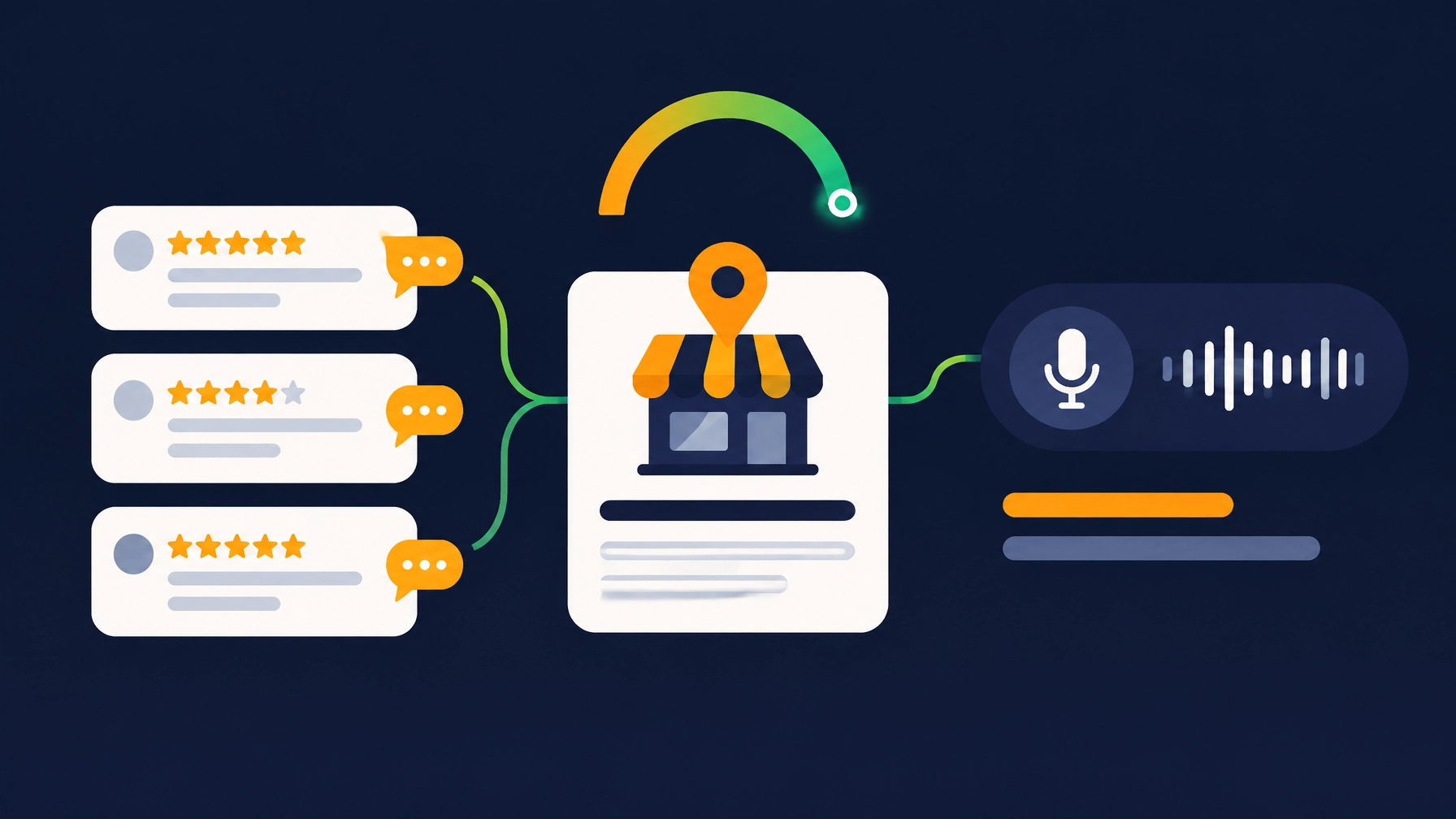
AI visibility is not a one-off status. It can change as your business changes and as third-party platforms change.
That matters more than many businesses realise.
A profile that was accurate six months ago may now show old opening hours, outdated service areas, discontinued services or stale review activity. Your website may still mention offers, locations or contact routes that no longer reflect how the business operates. Other sources may also drift out of date over time.
This matters because AI and voice systems are often working from public information that is fragmented and time-sensitive. If the information they find is old or mixed, their understanding may be old or mixed too.
That is also why no business can control which companies a third-party AI service surfaces or recommends. The best you can do is improve your chances of being discovered by keeping the underlying signals clearer, more consistent and more current.
For wider context, read The 5 Most Common Reasons Businesses Are Invisible to AI Search.
These five areas affect whether AI and voice systems can identify and understand a business.
That is not the same as a guarantee of visibility. And it is definitely not a guarantee that an AI assistant will recommend you.
No business can control which companies a third-party AI service surfaces or recommends.
What you can do is improve your chances of being discovered by making your business information clearer, more consistent, more credible and easier to interpret.
If you want a practical starting point, use the free AI visibility scan. It checks parts of your public digital presence and shows what may be helping or limiting discoverability.
It does not guarantee visibility, control AI results or promise a recommendation.
If you want the next step after that, the paid report is designed to turn those findings into prioritised, ready-to-apply fixes — so you can see what matters most, what may be holding you back and where to focus first.